
A voter-approved congressional map in Virginia that appears to benefit Democrats now sits under judicial review, as the Virginia Supreme Court weighs whether to block its implementation. What was intended as a democratic correction to decades of partisan gerrymandering may itself be challenged as politically skewed—this time in the opposite direction. The court’s decision could set a precedent for how voter initiatives, even those passed by popular vote, are evaluated under constitutional standards.
The case centers on a redistricting plan drawn by an independent commission and later ratified by voters through a referendum. While the map passed with public support and was designed to comply with federal voting rights law, Republican lawmakers and some legal experts argue it systematically disadvantages Republican candidates through regional clustering and district shaping. Now, the court must balance democratic legitimacy against claims of partisan bias—a tension at the heart of modern redistricting battles.
The Origins of Virginia’s Contested Map
Virginia’s current redistricting struggle stems from a 2020 constitutional amendment that created the Virginia Redistricting Commission. This bipartisan body was charged with drawing state and federal district lines, aiming to end the long history of partisan manipulation that plagued previous maps. When the commission deadlocked along party lines, the task shifted to the Virginia Supreme Court, which appointed special masters to draft the maps.
But in 2023, voters approved a ballot initiative to override that court-drawn map with a new version—one that reconfigured several districts to increase minority representation and, incidentally, strengthened Democratic positioning in at least three competitive seats. This new map shifted boundaries in Hampton Roads, Northern Virginia, and Richmond, consolidating urban Democratic strongholds while stretching suburban and rural Republican areas across multiple districts.
Critics argue that while the map meets racial fairness criteria under the Voting Rights Act, it does so in a way that overconcentrates Democratic votes. For example, the redrawn 7th Congressional District pulls in heavily Democratic areas of Chesterfield County, diluting GOP influence in the neighboring 10th District, which includes parts of Loudoun County—a once-competitive swing region now leaning more Democratic.
Legal Grounds for the Challenge
The legal challenge before the Virginia Supreme Court rests on two primary arguments: violation of the state constitution’s equal protection clause and improper delegation of redistricting authority.
Lead plaintiffs, including Republican legislators and conservative advocacy groups, claim the new map intentionally dilutes Republican voting power in violation of Article I, Section 11 of the Virginia Constitution, which prohibits denial of equal protection under the law. They cite metrics like the efficiency gap and partisan bias scores, which indicate the map could allow Democrats to win a majority of seats with as little as 48% of the statewide vote.
Additionally, opponents argue that the ballot initiative bypassed the constitutional redistricting process by allowing voters to override a court-approved map without returning to the commission or judicial review. They warn this sets a dangerous precedent where future majorities could repeatedly redraw maps through referendums, undermining stability and judicial oversight.
Defenders counter that the map was lawfully enacted through direct democracy—a safeguard built into the 2020 amendment. They emphasize that the plan improves compliance with Section 2 of the Voting Rights Act by creating a second majority-Black district in the 4th Congressional District, increasing fair representation for minority communities historically underrepresented in Congress.
How Voter Approval Complicates the Legal Landscape
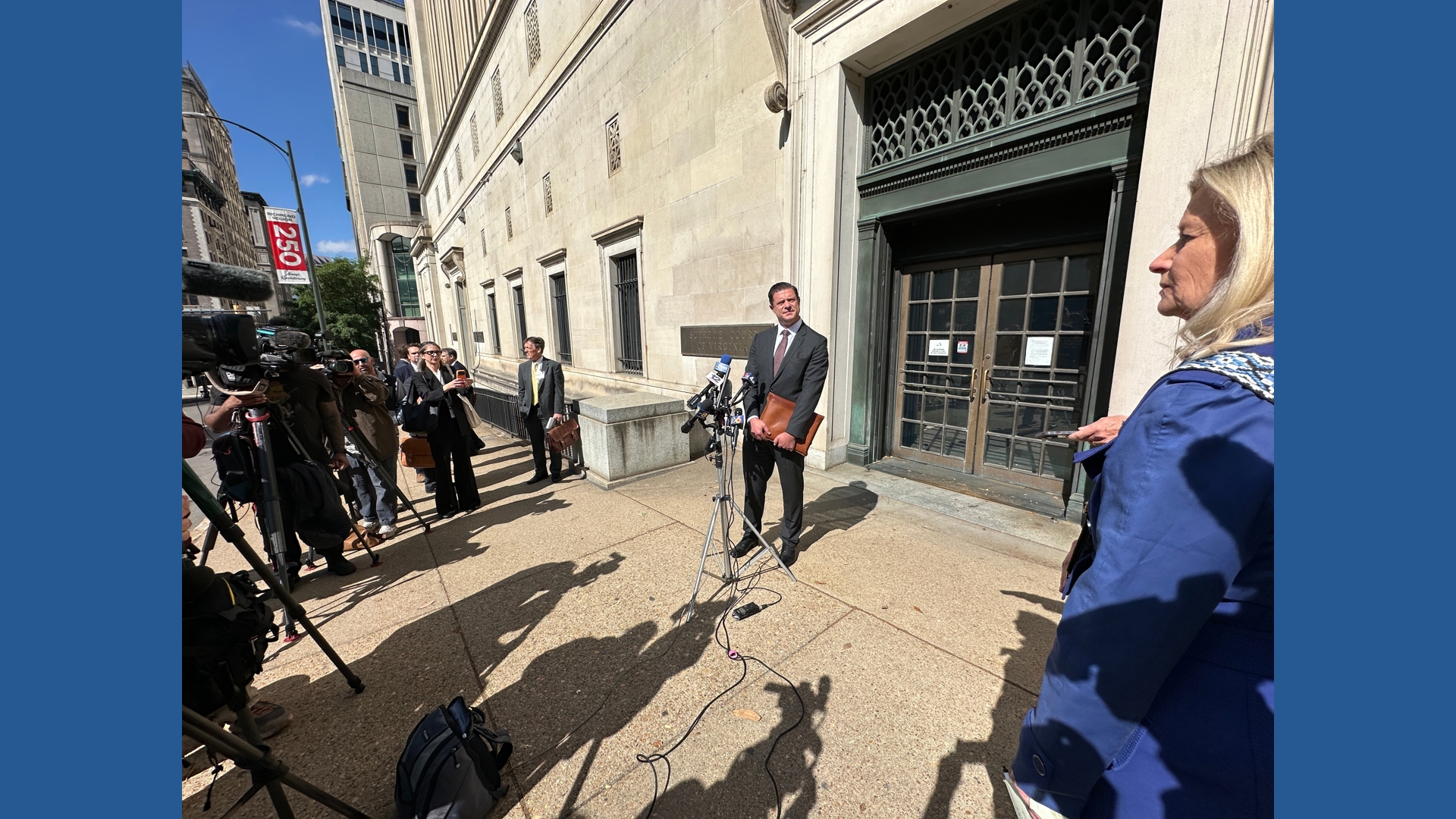
The fact that the map was approved by voters adds a rare layer of complexity. In most redistricting cases, courts strike down maps drawn by partisan legislatures. Here, the map emerged from a commission process and was later endorsed by the electorate—a direct expression of popular will.
This raises fundamental questions: Can a map be unconstitutional even if it’s backed by a majority of voters? And if so, where does judicial authority end and democratic decision-making begin?
Legal scholars are divided. Some, like Professor Miriam Seifter from the University of Wisconsin Law School, argue that courts have a duty to enforce constitutional limits regardless of popular support. “Democracy isn’t majoritarianism without constraint,” she wrote in a recent analysis. “If a voter-approved law violates equal protection, courts must intervene.”
Others caution against judicial overreach. “When the people speak through a ballot measure designed to correct past injustices, courts should show deference,” says Dan Hylton, a constitutional law expert at George Mason University. “Otherwise, we risk replacing popular sovereignty with judicial fiat.”
This case may force the Virginia court to define the outer boundaries of voter-initiated redistricting—a doctrine still in its infancy in most states.
Real-World Impact on Congressional Representation
If the Virginia Supreme Court blocks the current map, it would likely reinstate the previous court-drawn version, which produced a 6-5 Democratic majority in the state’s congressional delegation in the last election cycle. The new voter-approved map, however, could push that to 7-4 in favor of Democrats, altering Virginia’s influence in a closely divided U.S. House.
Consider the 10th District, currently represented by Republican Rep. Jennifer Kiggans. Under the new boundaries, the district absorbs more of Norfolk and Portsmouth—areas with strong Democratic leanings—potentially flipping it in the next election. Similarly, the 5th District, a long-time Republican stronghold stretching from Southside Virginia to the Shenandoah Valley, is split to create a more compact, competitive district that could favor a Democratic challenger.
These shifts aren’t just symbolic. In a House where control often hinges on a handful of seats, Virginia could become a key battleground state—much like Georgia or Arizona—shaping national legislative outcomes for years.
Precedent and National Implications
While redistricting fights are common, this case is unique in that it involves a voter-approved map under judicial threat. Most high-profile cases, like those in North Carolina or Alabama, involve maps drawn by partisan legislatures and challenged by civil rights groups.
Virginia’s situation inverts that dynamic: a reform effort born from bipartisan frustration with gerrymandering is now being questioned for allegedly producing the same outcome it sought to eliminate.
If the court blocks the map, it could discourage similar citizen-led initiatives in other states. Ohio and Michigan have implemented independent commissions with voter oversight, and activists in states like Florida and Missouri are pushing for similar reforms. A ruling against Virginia’s map might embolden opponents of direct democracy in redistricting, arguing that even well-intentioned reforms can go too far.
Conversely, if the court upholds the map, it would affirm the power of voters to override perceived judicial or legislative inaction—a potential boost for grassroots democracy movements nationwide.
Past Redistricting Lessons Virginia Can’t Afford to Ignore
Virginia has been here before. In the 1990s, the U.S. Supreme Court struck down a congressional map for racial gerrymandering, ruling that districts had been drawn so irregularly to pack Black voters that they violated the Equal Protection Clause. The court didn’t oppose creating majority-minority districts but objected to their extreme configuration.

Today’s debate echoes that history—but with partisan, not racial, lines at the forefront. The danger is repeating the same mistake: correcting one imbalance by creating another.
One key lesson from past litigation is that intent matters. Courts scrutinize whether a map was drawn to achieve a political end rather than comply with legal requirements. Virginia’s defenders must show that Democratic advantages are a byproduct—not the goal—of efforts to improve minority representation and geographic coherence.
They point to public records from the commission’s meetings, where racial equity and community integrity were prioritized over party metrics. But opponents highlight internal modeling data suggesting Democratic strategists influenced boundary decisions—raising questions about behind-the-scenes coordination.
What Happens Next?
The Virginia Supreme Court is expected to rule before the next election cycle begins. If it blocks the map, special masters may be reappointed to draw a new version, or the legislature could step in—though that risks reigniting partisan conflict.
If the map stands, election officials will begin preparing ballots under the new boundaries, potentially reshaping campaign strategies across the state. Candidates will need to reassess district demographics, fundraising networks, and voter outreach plans.
But beyond logistics, the ruling will send a message: whether Virginia’s experiment in democratic redistricting is a model for reform or a cautionary tale of unintended consequences.
Legal experts urge clarity and transparency regardless of the outcome. “Whatever the court decides, it must explain not just what it’s doing, but why,” says Rebecca Green, co-director of the Campaign Legal Center. “Public trust in redistricting depends on process, not just results.”
A Defining Moment for Virginia’s Electoral Future
The Virginia Supreme Court’s decision will not only determine the shape of the state’s congressional delegation but also test the limits of voter power in a system built on checks and balances. Blocking a popularly approved map could protect constitutional principles but risk alienating the electorate. Upholding it could empower citizens but open the door to future partisan manipulation under the guise of reform.
There are no clean answers—only trade-offs. But one thing is certain: how Virginia navigates this moment will influence how other states approach redistricting in an era of deep political polarization.
For voters, candidates, and reformers alike, the stakes couldn’t be higher. The court’s ruling must balance fairness, legality, and democratic legitimacy—without sacrificing any.
What is the Virginia Supreme Court deciding regarding the congressional map? The court is determining whether to block a voter-approved congressional redistricting map that favors Democrats, weighing claims of partisan gerrymandering against the legitimacy of direct democracy.
Why is the voter-approved map controversial? Although approved by voters, the map is accused of diluting Republican voting power through district configurations that benefit Democrats, raising constitutional concerns.
Can a voter-approved map be unconstitutional? Yes. Even if backed by a public vote, a map can be struck down if it violates constitutional protections like equal representation or due process.
What happens if the court blocks the map? The previous court-drawn map would likely be reinstated, preserving the current 6-5 Democratic advantage in Virginia’s U.S. House delegation.
How does the Voting Rights Act factor into this case? The new map aims to comply with the Act by creating a second majority-Black district, which supporters argue justifies its design despite partisan effects.
Who drew the current voter-approved map? It was developed by a redistricting commission and later refined by mapping experts before being ratified by voters in a statewide referendum.
Could this affect future redistricting efforts in other states? Yes. A ruling against the map might discourage citizen-led redistricting reforms, while upholding it could strengthen the role of direct democracy in electoral reform.
FAQ
What should you look for in Virginia Supreme Court Weighs Fate of Democrat-Favored House Map? Focus on relevance, practical value, and how well the solution matches real user intent.
Is Virginia Supreme Court Weighs Fate of Democrat-Favored House Map suitable for beginners? That depends on the workflow, but a clear step-by-step approach usually makes it easier to start.
How do you compare options around Virginia Supreme Court Weighs Fate of Democrat-Favored House Map? Compare features, trust signals, limitations, pricing, and ease of implementation.
What mistakes should you avoid? Avoid generic choices, weak validation, and decisions based only on marketing claims.
What is the next best step? Shortlist the most relevant options, validate them quickly, and refine from real-world results.