Construction sites, manufacturing floors, utility crews, and industrial teams all share one constant: risk. A single misstep, overlooked hazard, or miscommunication can lead to injury—or worse. That’s where the toolbox talk comes in. It’s not a formality. It’s not paperwork. It’s a focused, brief safety discussion that happens right where work happens—on the ground, with the team, before tasks begin.
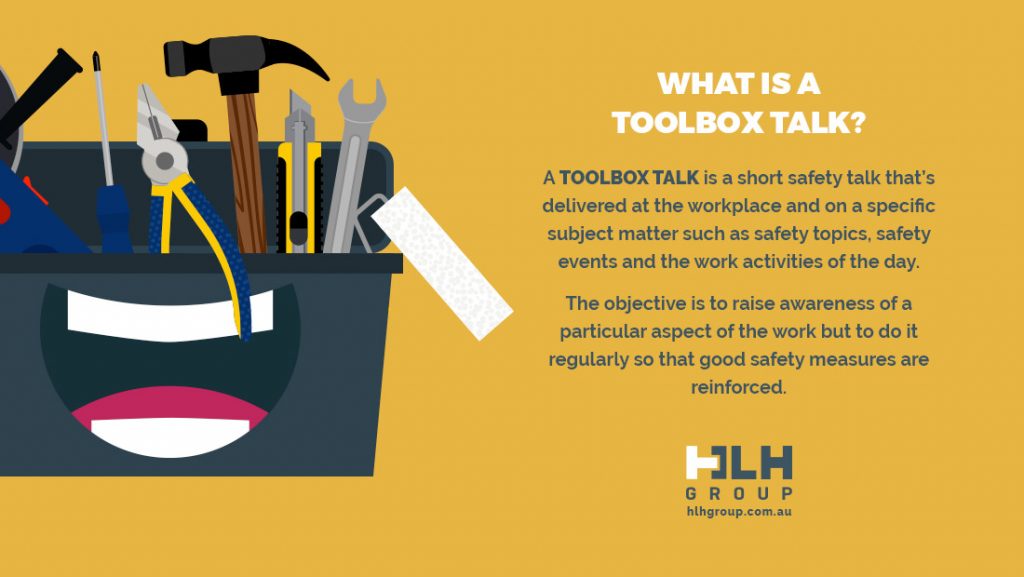
At its core, a toolbox talk is a short, informal safety meeting. Typically lasting 5 to 10 minutes, it brings a crew together to discuss the specific hazards of the day’s work, review safe practices, and reinforce accountability. Unlike lengthy safety trainings held in classrooms, these talks are timely, targeted, and tactical.
Yet despite their simplicity, toolbox talks are one of the most effective tools for preventing accidents and shaping a culture of safety. The challenge? Many teams treat them as routine check-the-box exercises—repeating the same generic scripts, failing to engage workers, or skipping them altogether when schedules tighten.
That’s a dangerous mistake. When done right, a toolbox talk isn’t just about compliance. It’s a leadership moment. It’s a chance to connect, clarify, and correct before work begins.
The Purpose of a Toolbox Talk
A toolbox talk serves three primary functions: awareness, alignment, and action.
Awareness means calling out real-time risks. Today’s wind conditions might affect crane operations. Wet floors could create slips in a maintenance bay. A new subcontractor on site may not know emergency exits. The talk surfaces these issues before they surface on an incident report.
Alignment ensures everyone interprets the plan the same way. Two workers might read a work instruction differently. One assumes lockout/tagout is complete. Another thinks it’s pending. A 90-second talk can eliminate that gap.
Action is where accountability kicks in. The talk isn’t complete until the crew agrees on what each person will do differently today to stay safe. That could mean double-checking harness anchors, confirming communication protocols, or speaking up when something feels off.
These aren’t theoretical benefits. OSHA and safety researchers consistently link regular toolbox talks to reduced incident rates. A 2020 study by the Construction Industry Institute found that crews conducting daily safety huddles saw a 35% drop in recordable injuries over 12 months—compared to teams that held them sporadically.
How a Toolbox Talk Works in Practice
Imagine a crew arriving at a commercial roofing site. Instead of splitting off to their stations, the foreman gathers them near the equipment trailer.
“Before we unroll the membranes, let’s take five,” he says. “High winds are forecasted by noon. We’ve got two guys working near the west edge—gusts could hit 25 knots. Are all fall protection systems verified?”

One worker confirms his lanyard is anchored. Another admits he hasn’t inspected his harness since last week. That triggers a quick recheck. The team agrees to monitor the weather radio and pause work if wind exceeds 20 mph. They also remind each other to keep tools secured—no tossing trowels into buckets.
This is a textbook toolbox talk: concise, contextual, and collaborative. It addresses a time-sensitive hazard, verifies controls, and establishes shared responsibility.
Contrast this with a cookie-cutter version: “Remember to wear your PPE. Watch for hazards. Stay safe.” That message, repeated weekly, becomes background noise. Workers tune it out. Real risks go unaddressed.
Key Elements of an Effective Toolbox Talk
Not all toolbox talks deliver value. The best ones share these five components:
1. Relevance to Daily Work The topic must match what the team is doing today. Talking about confined space entry on a day when everyone is installing drywall wastes time. Focus on current tasks: excavation, electrical testing, forklift operation, etc.
2. Engagement, Not Lecture The leader shouldn’t just talk at the crew—they should ask questions. “What’s the biggest risk in this trench?” “Has anyone seen this equipment behave oddly?” This invites input and surfaces blind spots.
3. Clear Takeaways End with one or two actionable behaviors. “Everyone checks their anchor point before climbing,” or “No solo work in the mechanical room without radio check-ins.” Vague advice (“be careful”) doesn’t stick.
4. Documentation (When It Adds Value) Some industries require sign-in sheets or digital logs. That’s fine—but don’t let paperwork overshadow the conversation. If the focus shifts from safety to signatures, the talk has failed.
5. Follow-Through The talk doesn’t end when the huddle breaks. Supervisors should observe whether commitments are kept. Did workers actually double-check their fall protection? If not, why? Addressing gaps closes the loop.
Common Mistakes That Undermine Toolbox Talks
Even experienced teams fall into traps that drain the value from these sessions.
Mistake 1: Repeating the Same Topics Monthly Rotating through “Ladder Safety” every January or “Heat Stress” every July turns the talk into a ritual. Workers anticipate the script and disengage. Rotate topics based on seasonal risks, project phases, and incident trends.
Mistake 2: Frontloading All Talks on Monday Some crews hold three toolbox talks on Monday to “cover the week.” That’s not how risk works. Hazards evolve daily. Weather changes. Equipment fails. Workflows shift. Talks must be current.
Mistake 3: Letting the Same Person Lead Every Time If only the site manager speaks, others stay passive. Rotate facilitation among crew leads or experienced workers. A laborer discussing silica dust exposure from their own perspective often resonates more than a supervisor quoting OSHA.
Mistake 4: Ignoring Near Misses A dropped tool, a tripped circuit breaker, a close call with a moving vehicle—these are perfect triggers for an impromptu toolbox talk. Skipping them misses a teachable moment.
Mistake 5: No Feedback Loop If workers suggest a better way to handle a hazard during a talk, but nothing changes, trust erodes. Acknowledge suggestions. Test solutions. Report back.
When to Hold a Toolbox Talk (And When Not To)
Timing matters. These are ideal triggers for a toolbox talk:
- Start of a shift or new work area
- Introduction of new equipment or process
- Change in weather or environmental conditions
- After an incident, near miss, or safety audit finding
- When a new worker joins the crew
Avoid scheduling talks during fatigue peaks—like mid-afternoon on a hot day—or when crews are rushing to meet a deadline. Forced attention is no attention.
Also, don’t hold a toolbox talk if the leader isn’t prepared. A half-hearted, disorganized session does more harm than skipping it. Better to delay five minutes and deliver value than rush through a forgettable monologue.
Industry-Specific Uses of the Toolbox Talk
While common in construction, toolbox talks are valuable across high-risk fields.
In Manufacturing A plant team might discuss lockout/tagout procedures before servicing a conveyor line. The talk focuses on energy isolation points, communication signals, and emergency stops.
In Utility Work Crews handling live electrical systems use talks to confirm approach boundaries, PPE levels, and radio protocols. One company reported a 40% reduction in arc flash incidents after standardizing daily electrical safety huddles.
In Oil and Gas Offshore teams often hold talks before shift changes, emphasizing confined space entry, gas detection, and emergency muster points. The remote environment makes coordination critical.
In Healthcare (Maintenance Teams) Even hospitals use toolbox talks—just not for surgeons. Facilities teams conducting boiler repairs or electrical upgrades use them to prevent accidents in live clinical environments.
Making Toolbox Talks Part of Your Safety Culture
The best organizations don’t see toolbox talks as isolated events. They weave them into daily rhythms.
One utility contractor assigns a “Safety Champion” each week—rotated among crew members. That person leads one talk, researches the topic, and shares a real-world case study. Workers report higher engagement and more willingness to speak up.
Another construction firm uses video recordings of toolbox talks (with consent) to review communication quality. Supervisors get coaching on how to ask better questions and listen actively.
Technology helps too. Digital platforms allow crews to access topic libraries, log talks, and track completion—but only when used to support, not replace, conversation.
The goal isn’t perfection. It’s progress. A slightly better talk today than yesterday. One worker who speaks up because they felt heard last week. A hazard caught before it causes harm.
Final Thoughts: Turn Minutes into Meaning
A toolbox talk is more than a safety ritual. It’s a micro-opportunity to reinforce values, build trust, and protect lives. Ten minutes may seem small, but over a year, that’s nearly 40 hours of focused safety dialogue per crew.
Don’t waste it on platitudes. Make it real. Make it relevant. Make it a conversation workers remember—not because it was mandatory, but because it mattered.
Start tomorrow with a question, not a script. Ask your crew: “What’s one thing we can do today to work safer?” Then listen. That’s the heart of what a toolbox talk should be.
What Is the Toolbox Talk – Frequently Asked Questions
What is the main goal of a toolbox talk? The main goal is to discuss job-specific hazards, reinforce safe behaviors, and promote crew awareness before work begins—reducing the risk of accidents.
How long should a toolbox talk last? Ideally 5 to 10 minutes. It should be brief enough to hold attention but long enough to cover critical risks and actions.
Who should lead a toolbox talk? Typically a supervisor, foreman, or safety officer—but experienced team members can and should rotate in to lead, encouraging broader engagement.
Do toolbox talks need to be documented? In regulated industries, yes—records may be required for compliance. However, documentation should support the talk, not replace it.
Can toolbox talks prevent serious incidents? Yes. When conducted consistently and relevantly, they help identify hazards early, clarify procedures, and create a culture where workers feel empowered to speak up.
Are toolbox talks only for construction? No. They’re used in manufacturing, utilities, oil and gas, transportation, and any environment where safety-critical tasks occur.
What’s the difference between a toolbox talk and a safety meeting? Toolbox talks are short, frequent, and task-specific. Safety meetings are longer, less frequent, and often cover broader topics like policy updates or training reviews.
FAQ
What should you look for in What Is the Toolbox Talk and Why It Matters? Focus on relevance, practical value, and how well the solution matches real user intent.
Is What Is the Toolbox Talk and Why It Matters suitable for beginners? That depends on the workflow, but a clear step-by-step approach usually makes it easier to start.
How do you compare options around What Is the Toolbox Talk and Why It Matters? Compare features, trust signals, limitations, pricing, and ease of implementation.
What mistakes should you avoid? Avoid generic choices, weak validation, and decisions based only on marketing claims.
What is the next best step? Shortlist the most relevant options, validate them quickly, and refine from real-world results.